The Roman Bridge and Aqueducts on the Side Jeep Tour
Before the lake and the village, the day has two stops built of old stone. One marks where the road surface stops; the other stands in the fields, well away from any town.
Short answer
The classic Side jeep tour makes two Roman stops. The old Roman bridge is the first stop of the day, at the point where the asphalt ends and the off-road tracks begin. Later, after the orchards, the convoy stops at the ancient Roman aqueducts, arches standing in open country, for photographs. We do not date either of them or tell their history — the operator's record gives neither.
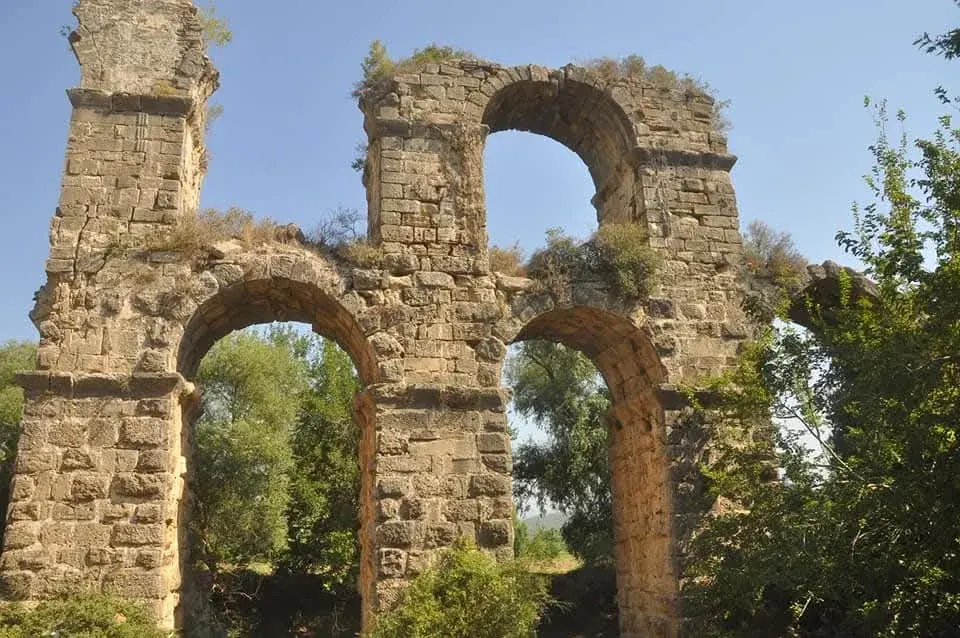
The old Roman bridge: where the tarmac stops
After the morning pickup, the convoy drives on ordinary roads until it reaches the bridge. You get out here first, and for a practical reason as much as a scenic one: it is where the asphalt runs out, and the jeeps form up there before they head onto the tracks.
From the bridge on, the character of the day changes. The next stretch is off-road — dry riverbeds and stream crossings, and in summer the first of the water between the jeeps. If you want to know what that part feels like, read the off-road part.
The aqueducts in the fields
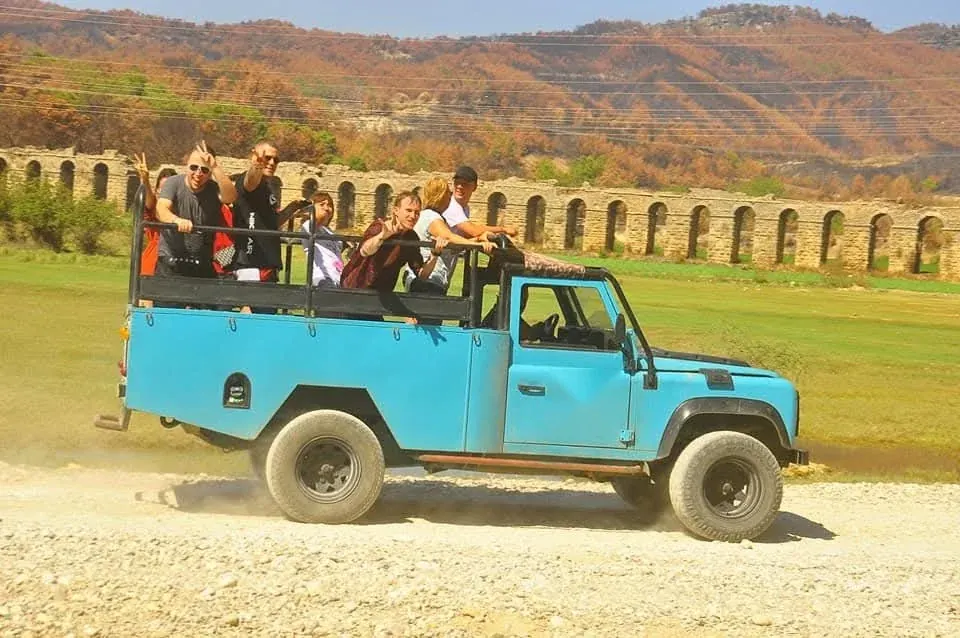
Further on, past the orange, lemon and pomegranate trees and the cotton and sesame fields, the convoy reaches the ancient Roman aqueducts. The arches stand in open country, and the jeeps stop beside them so everyone can get out and take pictures. Several of the operator's own photographs on this site were taken here, with the blue jeeps parked under the arches or passing along the road beside them.
It is a photo stop, not a guided site visit with a ticket desk. Neither the aqueducts nor the bridge appear among the extras paid on the spot.
What we do not claim
You will find plenty of dates, builders and stories attached to Roman remains along this coast. We do not repeat any of them here. The operator's record calls the bridge old and Roman and the aqueducts ancient and Roman, and that is as far as we go. We do not say when they were built, by whom, what they once supplied, or what state they are in.
If the history matters to you, ask your guide on the day. Guiding is in English, German and Russian, plus Turkish.
Where the two stops sit in the day
| Order | Stop | What happens |
|---|---|---|
| Stop 2 | Old Roman bridge | First stop; the asphalt ends and the convoy lines up |
| Stop 3 | Off-road riverbeds | Dry riverbeds and stream crossings |
| Stop 4 | Orchards and fields | Orange, lemon, pomegranate; cotton and sesame |
| Stop 5 | Roman aqueducts | Photo stop beside the arches |
Numbered as in the day, stop by stop, where stop 1 is your hotel pickup. The driver may adjust the order to suit the day.
On which tours you see them
Both day tours pass the bridge and the aqueducts: the classic day and the zoo route, which is the same day with one stop added. The night safari does not — it heads for the water, the dinner and the cruise instead. The countryside between the two Roman stops is described in villages of the Taurus.